The Fassifern Field Naturalists Club Inc. would like to acknowledge the Yugarapul People, the Traditional Custodians of the land on which our Club is founded, and pay our respects to their Elders past and present, their languages, customs, culture and connection to this wonderful country.

Sunday, 20 August 2017

Outing Report - "Moon View", August 2017

An extremely windy day, the worst this season, but it didn't deter the Natters on their August outing. More than twenty met at "Moon View", Peter & Fleur's property.

The Fassifern Field Naturalists haven't been here for a number of years but "Moon View" still has it's particular charm. 

We set off through the casuarinas heading for the gorge that runs through the property. Two Glossy Black Cockatoos were feeding quietly here. We were first aware of their presence by the quiet chittering as they delicately fed on the seeds. They stayed there for all the morning as they were still in the same tree on our return journey.


Some of the
remarkable rock formations
Down in the gorge it was much calmer and there was plenty of birds. White-throated Honeyeater, Rose Robin, Scarlet Honeyeater and Eastern Spinebill were some of the birds taking advantage of the warmth, the flowers and the rock pools.


Immediately the Natters spread out, investigating the geology, plants and water life, as well as birdwatching. Sighting of the day would be the Brush-tailed Rock Wallaby seen scrambling up the side of the gorge. No picture unfortunately. You'll just have to click on the link to look at this fact sheet.

Natters spreading out along the gorge
This area was frequented by aboriginals in the past and Peter told us a little of the history and showed us some hollows made by grinding stones.
Hollow worn by aboriginal grinding stones.
Then it was up to the other side of the gorge into heath and all the unique and amazing plants that grow there. We were soon trying to key the hoveas that were just coming into bloom, hovea similis and hovea acutifolia perhaps. (Click on links to see images.)
Wandering towards the heath
Beetle on leptospermum flower


The leptospermum were in flower but so tiny you could easily miss them. This little scarab beetle, possibly of the Chrysomelidae family, is covering one bloom completely.


We eventually came out on an open rock face where we had great views of Mt Moon and the surrounding country.
Mt Moon from "Moon View"

Birds (26 species): Bar-shouldered Dove, Glossy Black-Cockatoo, Little Lorikeet, Crimson Rosella, Laughing Kookaburra, White-throated Treecreeper, Variegated Fairy-wren, Brown Gerygone, Spotted Pardalote, Eastern Spinebill, Lewin's Honeyeater, Yellow-faced Honeyeater, Scarlet Honeyeater, White-throated Honeyeater, Golden Whistler, Rufous Whistler, Grey Shrike-thrush, Pied Currawong, Grey Fantail, Willie Wagtail, Torresian Crow, Leaden Flycatcher, Rose Robin, Eastern Yellow Robin, Silvereye, Red-browed Finch.
Reptiles: Wall Skink.
Butterflies: Common Grass-yellow, Wanderer, Evening Brown, Orange Ringlet.
Mammals: Brush-tailed Rock Wallaby.
Other Invertebrates: European Honey Bee.

Some Flora of Interest: Brown Wattle Acacia bruniodes, Soap Tree Alphitonia excelsaBertya pinifolia - classified as near threatened', Smooth-barked Apple Angophora leiocarpa, Native Olive Chionanthaus ramiflora, Lemon-scented Gum Pink Corymbia citriodora, Bloodwood Corymbia intermedia, Brown Bloodwood Corymbia trachyphloia, White Mahogany Eucalyptus acmenoides, Gum-topped Ironbark Eucalyptus dura, Grevillea linsmithii another rare plant, Settlers’ Flax (Grub Plant) Gymnostachys anceps, Hovea acutifoliaHovea similisKeraudrenia sp., Small-fruited tea-tree Leptospermum microcarpum, Hairy Psychotria Psychotria loniceroides [info from member - Psychotria is a good butterfly plant.], Forest Grass Tree Xanthorrhoea latifolia.

Outing Report - Head of the Condamine, July 2017

Report adapted from the August Newsletter.

We all squeezed into cars in Boonah and headed up into the clouds of the Main Range to take in the delights of waterfall wonderland. Our first stop - the Teviot Falls - were misted and mysterious. But the Red Apple trees (Syzygium ingens, aka Acmena brachyandrawere in fruit with bright red bunches contrasting with the greens of the canopy. 

Cambanoora, or Condamine, Gorge is a spectacular sight.

Looking towards the Gorge

Cambanoora or Condamine Gorge
from the Head of the Condamine River
 
We made stops at both Queen Mary and Brown's Falls. They had plenty of water. At Queen Mary ground orchids were noticed (by some of us with eagle eyes and macro cameras) in a number of sheltered spots – mainly Nodding Greenhoods (Pterostylis nutans). A couple of Spotted Pardalotes came very close and they would be, without doubt, the most beautiful of tiny birds. While at Brown's those members able to endure the perils of rock-hopping saw the falls while others listened to the elusive Logrunner. As usual, heard but not seen.
Rock-hopping and log-kneeling at Brown's Falls!
The last leg of the trip was to travel through Killarney to Mt Colliery (there was a coal mine somewhere near here a long time ago) and then up the mountain back towards Mt Superbus. We had wonderful views into the Condamine Gorge and the potato fields of Spring Creek. 
Some of the northern escarpment of the gorge
with potato fields near the horizon.

Although fairly cleared the mountains still held a few scrub patches. We stopped on Gambubal Road at one clump to see what Glen Leiper had been gushing about at our last AGM. Over a dozen delightful species were noted there and I am sure we just scratched the surface. Some Sassafras (Doryphora sassafras) was in flower. A Common Acronychia (Acronychia oblongifolia) was in fruit – a white segmented drupe. A Narrow-leaved Tuckeroo (Cupaniopsis baileyana) stood out with its long, compound leaves. Orange Blossom Orchids (Sarcochilus falcatus) were in bud. 


Storm clouds rolling in over the Gorge (taken near "the clump")
At over 1,000 metres altitude, it got a bit cold. And then we saw the rain coming. Storms too. Better get off this mountain quickly. And we did. Just in time. We followed some showers (or they followed us) all the way back to Boonah. What a great day in waterfall country, near the top of the world. 


Species List for whole trip
Birds: Brown Quail, Australian Wood Duck, Australasian Grebe, Brown Cuckoo-Dove, Bar-shouldered Dove, White-necked Heron, White-faced Heron, Straw-necked Ibis, Black-shouldered Kite, Wedge-tailed Eagle, Masked Lapwing, Galah, Sulphur-crested Cockatoo, Rainbow Lorikeet, Musk Lorikeet, Crimson Rosella, Laughing Kookaburra, Albert's Lyrebird, White-throated Treecreeper, Superb Fairy-wren, Yellow-throated Scrubwren, Brown Gerygone, White-throated Gerygone, Brown Thornbill, Spotted Pardalote, Striated Pardalote, Eastern Spinebill, Lewin's Honeyeater, Yellow-faced Honeyeater, Bell Miner, Noisy Miner, Scarlet Honeyeater, Brown Honeyeater, White-naped Honeyeater, Australian Logrunner, Eastern Whipbird, Grey Butcherbird, Pied Butcherbird, Australian Magpie, Pied Currawong, Grey Fantail, Torresian Crow, Magpie-lark, Eastern Yellow Robin, Silvereye, Welcome Swallow, Common Myna.
Butterflies: Wanderer.

Sunday, 21 May 2017

Outing Report - Lutter Road, Charlwood, May 2017

The weather, after not looking promising on the Friday, dawned warm and sunny on Saturday morning, and stayed that way all day. The Fassifern Field Naturalists met at Lutter Road and caught up with old friends or made acquaintance with new ones. Lutter Road is on the western slopes of Mt French. 

It was misty on the Great Divide
We then set off in two groups; one to explore the scrub along the slashed tracks, and the other to admire the chooks, fossick in the scrub edges and walk up to the dam. We all met back for morning tea where we sat in the sunshine glorying in the magnificent view of the Great Dividing Range. Afterwards the group split up again; the adventurers diving into the scrub on the northern side of the block and the others meandering along the drive admiring the number and diversity of butterflies flitting about in the sunshine. By this time the scrub-bashers had joined the others for a wander along the road before returning to the view for lunch. By this time we were all sitting in the shade.
A juvenile White-bellied Sea-eagle circled above us while birds, butterflies, frogs, moths and vine scrub plants were all discussed over our delicious lunches. All except for Wendy who was on a bread and water diet!
Inspection of the Flindersia xanthoxyla leaves
On the property were some Long Jack or Yellow-wood, Flindersia xanthoxyla (derived from the Ancient Greek xanthos "yellow", and xylon "wood".) Read more ....

White Looper Moth or Flower-eating Caterpillar, Pingasa chlora
This magnificent specimen was resting on one of the carport posts. It can be forgiven for thinking it is the trunk of a gum tree because it is still well camouflaged. Click on the image to enlarge. Then you will see its hairy wings. Read more ....

Species lists
Bees: Blue-banded Bee Amegilla cingulate.
Beetles: Variable Ladybird Coelophora inaequalis.
Birds, 43 species: Brown Quail, Brown Cuckoo-Dove, Bar-shouldered Dove, Australian Pelican (in the far distance), White-bellied Sea-Eagle, Brown Goshawk, Wedge-tailed Eagle (a pair in the far distance), Pale-headed Rosella, Fan-tailed Cuckoo, Rainbow Bee-eater, Superb Fairy-wren, Red-backed Fairy-wren, White-browed Scrubwren, Speckled Warbler, White-throated Gerygone, Yellow-rumped Thornbill, Striated Pardalote, Eastern Spinebill, Lewin's Honeyeater, Yellow-faced Honeyeater, Brown Honeyeater, White-throated Honeyeater, Blue-faced Honeyeater, Noisy Friarbird, Eastern Whipbird, Black-faced Cuckoo-shrike, Varied Triller, Golden Whistler, Rufous Whistler, Grey Shrike-thrush, Grey Butcherbird, Pied Currawong, Rufous Fantail, Grey Fantail, Willie Wagtail, Torresian Crow, Rose Robin, Eastern Yellow Robin, Tawny Grassbird, Silvereye, Welcome Swallow, Martin sp., Mistletoebird, Double-barred Finch.
Butterflies, 11 species: Clearwing Swallowtail Cressida cressida, Common (Large) Grass-yellow Eurema hecabe, Yellow or Common Albatross Appias paulina, Tailed Emperor Polyura sempronius, Glasswing Acraea andromacha, Meadow Argus Junonia villida, Yellow Admiral Vanessa itea, Common Crow Euploea core, Lesser Wanderer Danaus chrysippus, Wanderer Danaus plexippus, Blue Tiger Tirumala hamata.
Frogs: Striped Marsh Frog Limnodynastes peroni, Eastern Sedge Frog Litoria fallax.
Moths: White Looper Moth or Flower-eating Caterpillar, Pingasa chlora.
Spiders: Garden Orb Weaver Eriophora transmarina, Golden Orb-Weaver Nephila sp.

Plants of interest: Rosewood Acacia fasciculifera, Brush Ironbark Bridelia exaltata, Long Jack or Yellow-wood Flindersia xanthoxyla, Crow's Apple Owenia venosa, Poison Peach Trema tomentose.

Wednesday, 17 May 2017

May Outing 2017 - western slopes of Mt French

It's been a while since FFNC explored this side of Mt French. We will be on private property. It is mainly regrowth wattle with some vine scrub in the gullies. In the clearing around the cabin there's plenty of naturalising to do including a gentle walk to the dam. There are magnificent views of the Great Dividing Range from the property.

Meet: at the property on Saturday 20th May at 8.30 am. 

Bring: Morning tea, and lunch. Bring the usual stuff – camera, sun screen, insect repellent, walking shoes, water, etc. CHAIRS! Reference books.


Fitness/Mobility: This outing caters for all. The more adventurous can explore the tracks through the bush while the more genteel can amble around the cleared areas. Some very interesting insects were discovered during the recce. 

Please email us for more information.

Camp Report - Cullendore, NSW

Cullendore High Country is an ideal spot for a field naturalists camp. Overlooking the Maryland National Park on the Qld-NSW border, it is at high altitude, and on the edge of the Granite Belt. This means there are different species of fauna, flora and fungi that we don't always get in the western Scenic Rim. We had a great time walking and driving the tracks. There was so much to see and do. Here's some photos which show what we got up to.

Species lists follow the photos.

All images are by members of the Fassifern Field Naturalists Club.
Fassifern Field Naturalists at Cullendore High Country

Matty's Dam, Cullendore High Country
 Australian Bluebells (Wahlenbergia sp) with wasp pollinator
White Patch Bark Moth (Scioglyptis lyciariap)
Russell’s Greenhood (Diplodium russellii)
White Stemmed Wattle Moth
Beautiful waterlilies
Ringed Xenica (Geitoneura acantha)
Water Snowflakes (Nymphoides indica)
Unknown insect (probably Tipulidae sp.) but several found flying close to the leaf litter in Maryland National Park
More Craneflies Tipulidae sp.
Morning Tea Reflections - stunning!

Species List: compiled by the Club Recorder from members’ sightings.


Birds Australian Wood Duck, Pacific Black Duck, Australasian Grebe, Bar-shouldered Dove, Wonga Pigeon, White-faced Heron, Straw-necked Ibis, Wedge-tailed Eagle, Purple Swamphen, Dusky Moorhen, Eurasian Coot, Masked Lapwing, Glossy Black Cockatoo, Yellow-tailed Black-Cockatoo, Galah, Sulphur-crested Cockatoo, Musk Lorikeet, Little Lorikeet, Australian King-Parrot, Crimson Rosella, Eastern Rosella, Fan-tailed Cuckoo, Azure Kingfisher, Laughing Kookaburra, White-throated Treecreeper, Brown Tree-creeper, Satin Bowerbird, Superb Fairy-wren, Variegated Fairy-wren, White-browed Scrubwren, Western Gerygone, Brown Thornbill, Striated Thornbill, Buff-rumped Thornbill, Yellow-rumped Thornbill, Spotted Pardalote, Striated Pardalote, Eastern Spinebill, Yellow-faced Honeyeater, White-eared Honeyeater, Noisy Miner, Red Wattlebird, Brown Honeyeater, White-cheeked Honeyeater, White-naped Honeyeater, Blue-faced Honeyeater, Grey-crowned Babbler, Black-faced Cuckoo-Shrike, Golden Whistler, Grey Shrike-thrush, Black-faced Woodswallow, Dusky Woodswallow, Grey Butcherbird, Pied Butcherbird, Australian Magpie, Pied Currawong, Grey Fantail, Willie Wagtail, Torresian Crow, Restless Flycatcher, Magpie-Lark, White-winged Chough, Apostlebird, Jacky Winter, Eastern Yellow Robin, Silvereye, Welcome Swallow, Mistletoebird, Double-barred Finch, Red-browed Finch, Australian Pipit. 

Mammals Red-necked Wallaby, Common Brushtail Possum, Rufous Bettong, Common Ringtail Possum, Brown Hare

Reptiles Carpet Python, Red-bellied Black Snake, Wall Skink

Amphibians Eastern Dwarf Tree Frog, Striped Marsh Frog, Beeping Froglet

Ants Jumper Ant (Myrmecia nigrocincta), Many more but couldn’t identify them.

Butterflies Greenish Grass-dart, Small Grass-yellow, Glasswing, Lesser Wanderer, Wanderer, Common Brown, Ringed Xenica, Common Grass-blue (unconfirmed Shouldered Brown)

Moths White Stemmed Wattle Moth (Chelepteryx chalepteryx), White-patch Bark Moth (Scioglyptis lyciaria)

Dragonflies Blue Skimmer (Orthetrum caledonicum)


Native Orchids - In Flower: Dark Mosquito Orchid (Acianthus exsertus), Common Wasp Orchid (Chiloglottis diphylla), Russell’s Greenhood (Diplodium russellii). 
Not In Flower: Pink Rock Orchid (Dendrobium kingianum, now with a taxonomic name change - Thelychiton kingianus), King Orchid (Dendrobium speciosum, also a name change - Thelychiton speciosus), Climbing Orchid (Erythrorchis cassythoide

Sunday, 16 April 2017

April Camp

Our annual April camp will be at Cullendore High Country. This privately run campground is on a 4000 acre cattle property, 2000 of which is reserved for camping. See Cullendore High Country for more details.

We'll be there from Saturday to Monday morning with the option for people to stay until Anzac Day on the Tuesday.

We have booked our group into the Greygums Campground which is suitable for tents, trailers and caravans. Fire pits are provided – bring your own wood or purchase on site. Flush toilets and hot showers are available nearby. 

We are really hoping to be lucky enough to see a quoll, but there's plenty of wildlife to suit everyone.


Just an example of Cullendore campsites
Tranquil setting at Cullendore High Country
Contact us through our email address for more information.

Saturday, 25 February 2017

Butterfly Beauty

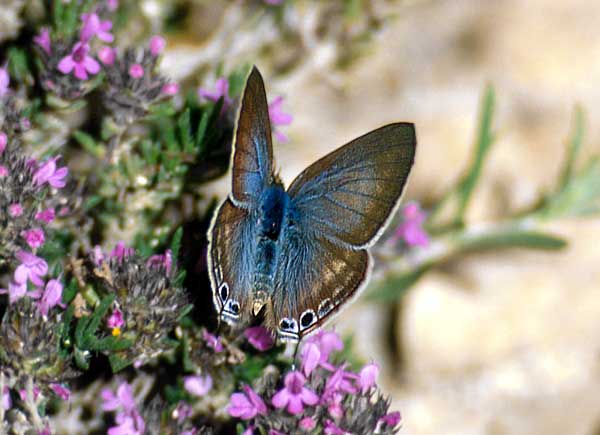
Long-tailed Pea-blue Lampides boeticus, Lake Wyaralong, 22-2-17
(Photo: Aub Podlich)
Butterflies are everywhere in this hot and humid weather. They are wonderful to see. The Fassifern Field Naturalist Club members have recorded at least 58 species of skippers and butterflies in our survey area. 

Some of them are very tiny like this lovely Long-tailed Pea-blue found by one of our members, Aub Podlich, on a recent walk.

This pretty little butterfly is found in all the mainland states, Lord Howe Island and occasionally in northern Tasmania. Also native to Europe, Africa, South Asia and Southeast Asia. They are known to be migratory in Europe. However, even in our own Scenic Rim a massive migration of them was witnessed at Mt Tamborine in 1974. "During August and September vast numbers of butterflies flew south for two weeks ..." . 

The males are a delicate lilac-blue on the upper wings while the females are brown with blue near the body. See this link or this. 

The larva, or caterpillars, feed on legumes such as Sturt's Desert Pea Swainsona formosa, Darling Pea Swainsona galegifolia and garden plants such as peas, green beans and sweet peas.

Bibliography:
"Butterflies of Australia" I.F.B. Common and D.F. Waterhouse, revised edition 1981.
Wikipedia - https://en.wikipedia.org/wiki/Lampides_boeticus
Tree of Life - http://ftp.funet.fi/index/Tree_of_life/insecta/lepidoptera/ditrysia/ papilionoidea/lycaenidae/polyommatinae/lampides/boeticus-3u.jpg
South Australian Butterflies - http://users.sa.chariot.net.au/~rbg/boeticus_ds.htm
APNI - Australian Plant Name Index https://biodiversity.org.au/nsl/services/apniFormat/ display/93060

Tuesday, 14 February 2017

February Outing 2017 - Burnett Creek Rd

Old saw mill area on Burnett Creek Road
This outing will be a leisurely walk around the property of the McKellar’s – up the end of Burnett Creek Road, across Post Box Ford. Standard vehicles should get across the creek but if you are not sure then there will be some 4 wheel drives waiting at the crossing.  When you get across the crossing, go about 1 km to the front gate of the property on the left.  We will all park around here and then walk up the track.  If you get to the old saw mill site and then a locked gate – you have gone a kilometre too far. It takes about 45 minutes from Boonah.

Meet: at the property gate on Saturday 18th February at 8.30 am. 


Bring: Cuppa, morning tea, and lunch.  Lunch back at the cars.  But morning tea out on the track.  Bring the usual stuff – camera, sun screen, insect repellent, walking shoes, water, etc.  Bird books, tree books, reptile books, even butterfly books.

Fitness/Mobility: This is for average mobility.  We walk up a small ridge but it is not too difficult.  Those with less mobility can stay on the road tracks.  We can even drive quadriplegics up the road to the house site – and back again, of course.

Please email us for more information.


Sunday, 22 January 2017

New Butterfly Sighting for Boonah Area

Chaetocneme denitza, Ornate Dusk-flat
Found in a garden in Dugandan in October last year, the Chaetocneme denitza, Ornate Dusk-flat or Rare Redeye, is not often seen.This lovely skipper* was lucky to be found. And it was very lucky that such a brilliant photograph was taken by Joan Kielly for it didn’t hang around for long. The sighting has been confirmed by Wes Jenkinson, a well-known lepidopterist from Beaudesert.

It was found in a typical position for the species, hanging upside down on the underside of a leaf with its wings outstretched. It was on a rose bush but the caterpillars feed on Eucalypts and Lophostemons such as Brush Box and Swamp Mahogany.

The adults are crepuscular: i.e. active during twilight. During the day they usually rest under a leaf. 

Their distribution is from the Qld-NSW border north to Cape York, then west across the top of the Northern Territory and into Western Australia. They are not often seen, as one of their names suggests. In se Qld they fly between October/November and February in open eucalypt forests of coastal and sub-coastal areas.

 (*Although Skipper butterflies share certain characteristics with other butterflies, particularly in egg, larval and pupal stages, they differ in several important ways. They have the antennae clubs hooked backward like a crochet needle, whilst other butterflies have club-like tips to their antennae. Skippers also have stockier bodies with stronger wing muscles. They are named for their quick, darting flight habits. More than 3500 species of skippers are recognised worldwide.)

Thursday, 12 January 2017

January Outing 2017 - Early Morning Bird Walk

Knehr Rd - western end of Lake Wyaralong
Fassifern Field Naturalist members
at Lake Wyaralong (in winter.)

Date: 21st January 2017

Arrive: 6 am – the best time to catch the birds and beat the heat.

Upon arrival, please register by signing the Attendance Book and pay the $2 per person participation fee.

Directions from Boonah: drive along the Ipswich/Boonah Road for approximately 7 km and turn right onto the Beaudesert/Gold Coast Road, drive 4.4km then turn left onto Old Beaudesert Road (western end). Drive 0.6kms then turn right onto Knehr Road. Drive 0.9km and then turn right, follow this section of road which goes over a flood causeway for another 0.9 km. Turn right again and follow the track down to the gate at the western end of the trail and dam. Meet here.

Directions from Beaudesert: Look for the Old Beaudesert Road turn off just towards the end of the new section of the Beaudesert/Boonah Road (approximately 28 km from Beaudesert). Turn right here and follow the instructions above.
Knehr Road is gravel, some small hills and winding parts to the road, however suitable for 2-wheel drive vehicles except after heavy rain. Check with us closer to the day of the field trip if concerned.

Level of Fitness: The Shoreline Track is not strenuous and is classified as easy by seqwater. The track is regularly maintained and gently undulating. 

Bring: morning tea (or breakfast), chair, snacks, drinks, binocs, camera, hats and plenty of sun screen and insect repellent.